
How Do I Read My Car's Temperature Gauge (& What’s it Telling Me)?
- Industry News
- PEAK
- November 6, 2026
Your car temperature gauge tracks coolant heat, not engine heat. Learn what a normal reading looks like and what to do when it runs hot or cold.
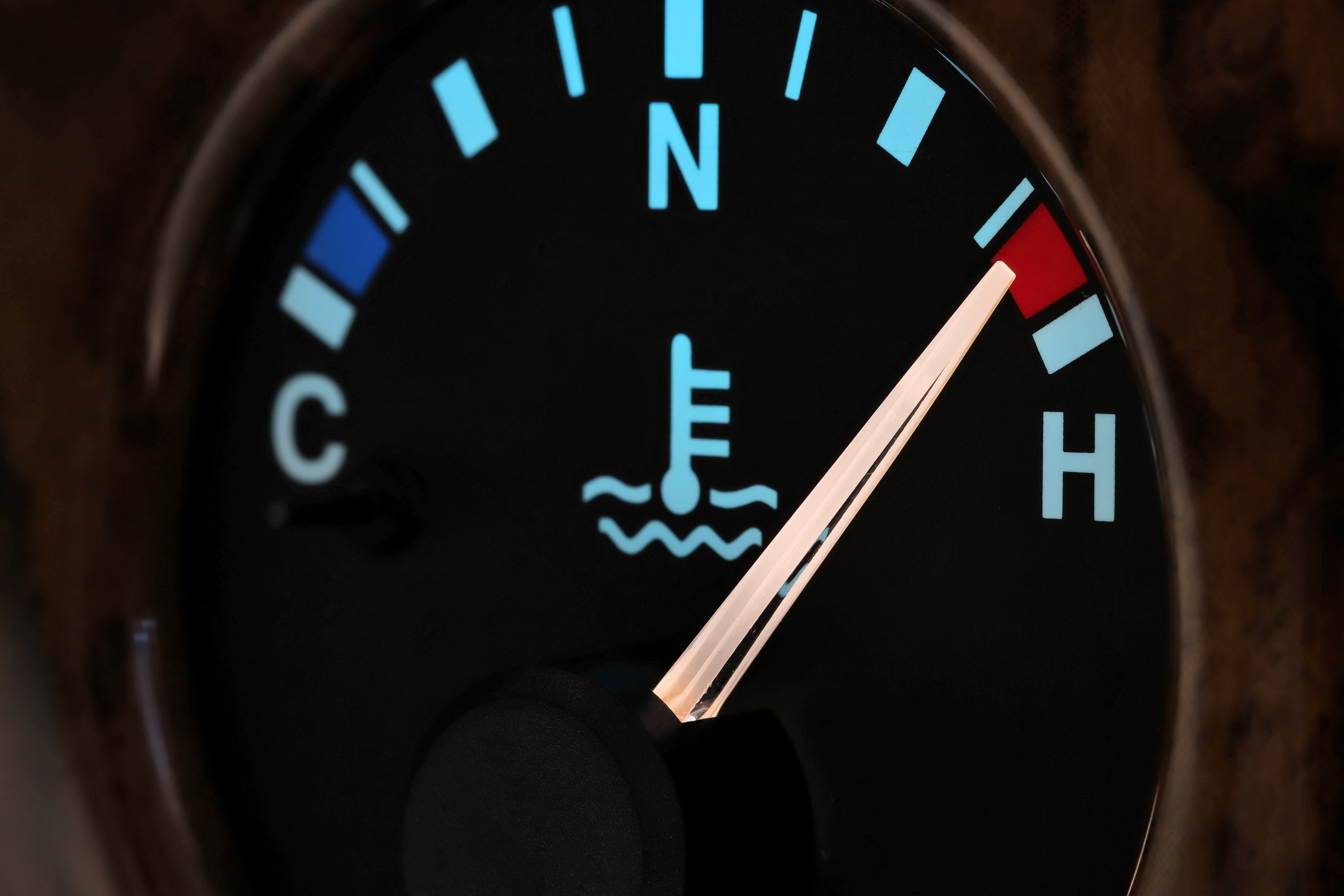
Reading your car's temperature gauge is pretty straightforward: Check where the needle rests within the gauge's temperature range. If it's near the middle, you're fine. If it's close to the top or bottom, your engine is running too hot or too cold — and both situations require immediate action.
While the basics are pretty easy to grasp, it takes a deeper dive to understand all the nuances of what your car temperature gauge is telling you. It's important to know what's normal and what signals a developing problem. To that end, here's what you need to know:
- What does your car's temperature gauge actually measure?
- What do the letters, numbers, and symbols on the temperature gauge mean?
- What does a normal temperature reading look like?
- What should you do if your gauge is running hot?
- What should you do if your gauge is running cold?
Coolant plays an all-important role in this, so we'll also explain how to care for your car's cooling system to help you avoid temperature troubles in the first place.
What Does Your Car's Temperature Gauge Actually Measure?
It's a common misconception that your car's temperature gauge directly measures the heat levels in your engine. Your gauge actually tells you the temperature of your engine coolant, which is one of the most important fluids in your vehicle.
Coolant absorbs the heat your engine produces while your vehicle is running. It travels through the cooling system, collecting heat and releasing it into the radiator. There, it gets carried away by flowing air. The coolant fluid then circulates back through your engine, repeating the same process over and over.
The ideal temperature range for coolant fluid is 195°F to 220°F (about 90°C to 105°C). This range represents the "sweet spot" where your engine works best: oil lubricates efficiently, fuel burns at its cleanest, and the internal clearances between your engine's working parts are optimized.
Coolant also has a maximum safe range of 185°F to 230°F (about 85°C to 110°C). Even if your temperature gauge slips outside its ideal zone, you can still safely operate your vehicle as long as your coolant stays in this range. Your engine might be running slightly cool or slightly warm, but you're still within engineered safety limits.
Problems start when you breach the minimum or maximum safe range. Before exploring that, let's look at how to take a temperature reading and understand what it means.
What Do The Letters, Numbers, And Symbols On The Temperature Gauge Mean?
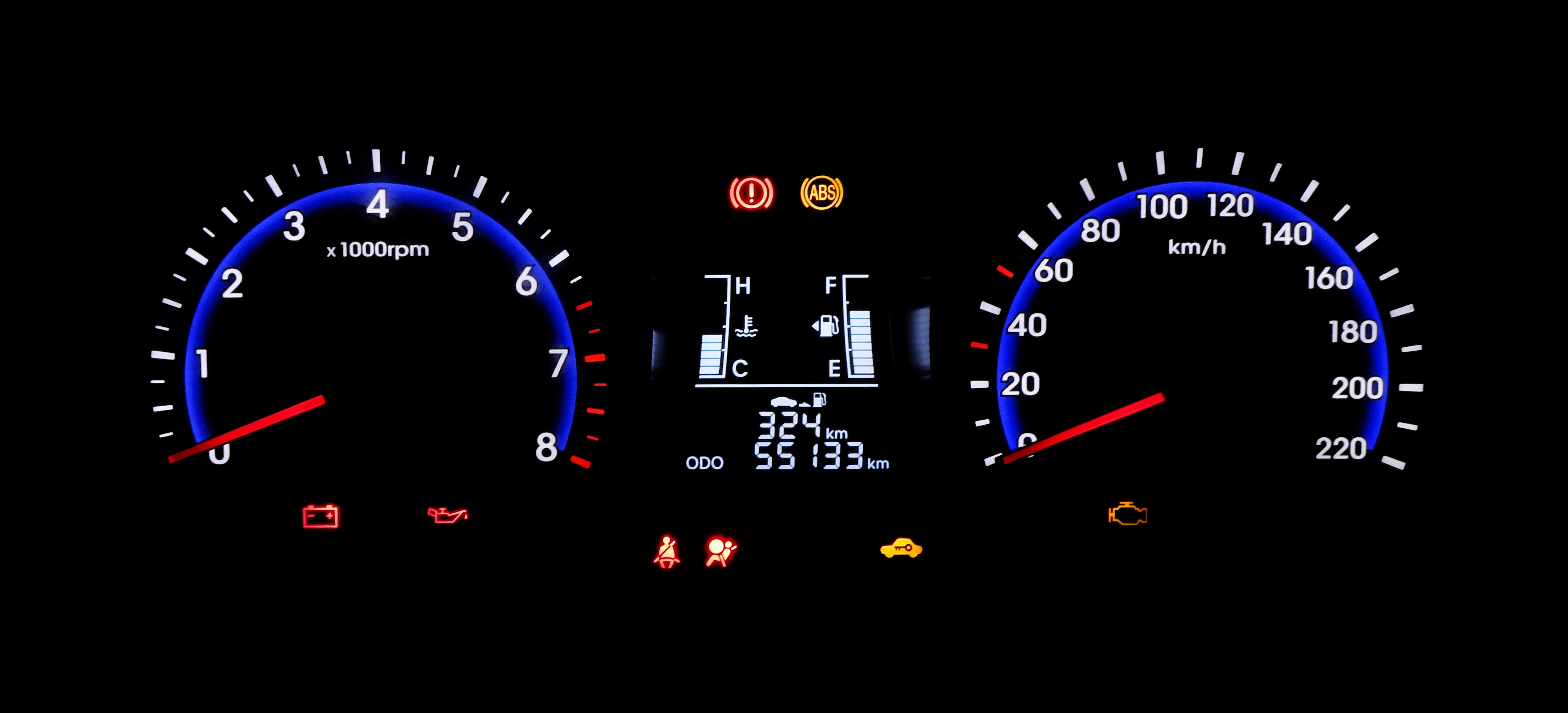
Passenger vehicles use a few different temperature gauge designs. Some just have numbers that correspond to specific temperature readings or ranges. Lower numbers indicate cooler engine operation, while higher numbers indicate hotter operation. Easy peasy.
Other gauges use letters: "C" for "cold" and "H" for "hot." If your needle is too close to either the "C" or the "H" end of the gauge after about five minutes of normal driving, you might have a problem.
You might also notice some symbols:
- The thermometer icon is used to identify the coolant temperature gauge.
- Some vehicles use a red line or gradient block as a visual reminder of the danger zones.
- Gauges may also have graduated tick marks that show incremental changes in coolant temperature.
By paying attention to where the needle normally rests and how it moves, you can detect subtle changes before they trigger a warning or indicate an emergency.
There's one other angle to explain here: the different names for your car's temperature gauge. You might hear it be called a "water temperature gauge" or "engine temperature gauge." Really, these alternate terms all describe the same gauge with the same purpose and the same function.
Before coolant fluid came along, cars just used plain water to regulate engine temperature. "Water temperature gauge" (or "water temp gauge") is a historical artifact of this bygone era.
"Engine temperature gauge" accurately captures the indicator's general function. Even though the term isn't quite technically correct, it's easy to understand and it clearly conveys the instrument's overall purpose. That's why "engine temperature gauge" is widely used, especially with people who are not automotive technicians.
What Does a Normal Car Temperature Reading Look Like?
A normal temperature reading has a steady needle situated right in the middle of the gauge's temperature range. Many modern cars have buffered temperature gauges, which means the needle is programmed to lock in the center of your gauge even though your coolant temperature is actually fluctuating slightly. This design stops drivers from overreacting to minor and normal changes in temperature, which can occur as:
- The car warms up from a cold start
- You idle in stop-and-go traffic or at a red light
- You accelerate while going uphill
Normal, safe fluctuations can also happen if you blast the air conditioning, carry a heavy load, drive in extreme heat, or drive across major outdoor temperature changes.
The temperature gauge's needle will typically stay in the middle or safe range and only move to higher or lower readings under:
- Extreme internal engine stress
- Cooling system component failures
- Dangerously low coolant levels
- Thermostat fault conditions
These are the movements you need to watch for.

What Should You Do If Your Temperature Gauge Is Running Hot?
If your temperature gauge is moving into the high end of its range, it means your engine isn't getting rid of heat the way it should. Other signs of overheating include:
- Heat-related dashboard warning lights come on
- Steam comes out from under a closed hood
- Engine performance abruptly drops off
- Sweet-smelling cabin odors indicate a coolant leak in the heater core
You should take action at the first sign of overheating. This first sign could come from a car temperature gauge pushing up into the high end of its range, or from one or more of these other warning signs.
Here's what to do:
- Slow down and pull over as soon as it's safe
- Shut the engine off
- Give the car 20 minutes to cool off
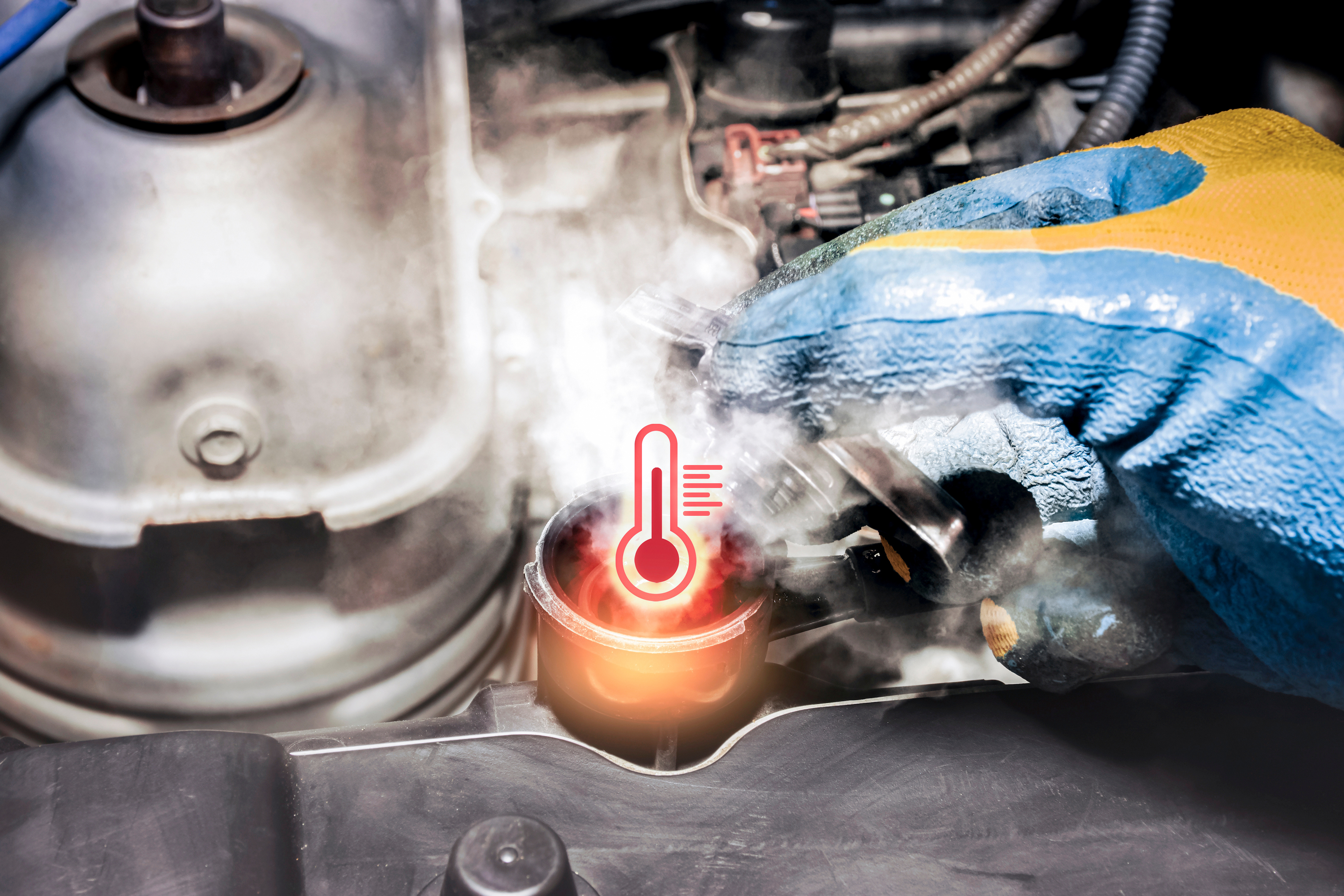
DO NOT open the radiator cap before the engine is cool. Your car's cooling system is pressurized, and it could eject superheated fluids if you open the radiator cap while the engine is hot or warm. These fluids can cause burns and other serious injuries.
After 20 minutes, check your coolant levels. Top them off if they're low, then try restarting the car to see how the temperature gauge responds. If it normalizes, drive straight to the nearest automotive service center. Do not push your vehicle to reach your original destination unless you're closer to that destination than you are to a service station.
If the gauge doesn't normalize, call a tow truck. If you manage to reach your destination, call a tow truck once you get there. For further details, consult our explainer on what to do if your vehicle overheats.
What Should You Do If Your Temperature Gauge Is Running Cold?
If the needle remains unusually low in the gauge after your car has had time to warm up, schedule an appointment with your mechanic as soon as possible. You can drive to your destination, but a cold-running engine indicates a problem that can lead to potentially serious engine damage over days and weeks.
Typical causes of an unusually low running temperature include:
- A broken engine thermostat
- An airlock or large air pocket trapped in the cooling system
- An electrical fault
- A powertrain control module (PCM) fail-safe trigger
Unlike overheating, an engine that's running too cold is not an immediate emergency. However, you do need to have the cause diagnosed and fixed promptly. Your engine oil can’t reach its optimal thickness if internal conditions are too cool. This can lead to fuel efficiency losses, increased emissions, and premature engine wear.
How To Care For Your Car's Cooling System
Proper maintenance can help you avoid cooling system failures on both the too-hot and too-cold sides of the temperature equation. Follow these basic tips to detect problems and prevent minor issues from becoming major headaches:
- Check your coolant levels every 3–6 months while your engine is cold
- Top off your coolant if levels are too low
- Inspect your coolant condition twice a year to make sure it doesn’t contain sediment, particles, or rusty discoloration
- Perform checks of your hoses, belts, pumps, and connections to look, listen, and smell for obvious signs of wear, damage, or leaks
- Flush and replace your coolant by doing a flush-and-fill when your coolant needs replacing or when you reach the manufacturer's recommended interval
- Use the correct coolant formulation for your vehicle, as specified in your owner's manual
When the time comes to replace your coolant, make sure you choose the right formulation. You can check your owner's manual for the coolant chemistry specs your vehicle needs. Different coolant fluid colors indicate different chemistries, so always make sure you put a compatible product in your vehicle.
If you're looking for a broadly compatible option, PEAK Universal is designed for use across a wide range of cars and trucks. For precision-engineered performance, PEAK offers Original Equipment Technology coolants formulated for Asian, European, and North American vehicles.
To learn more, check out this complete guide to maintaining your car's cooling system or explore the complete lineup of PEAK antifreeze coolants.
Frequently Asked Questions
What does a car’s temperature gauge actually measure?
It measures the temperature of your engine coolant, not the engine itself.
What is a normal temperature gauge reading?
A normal reading sits steady near the middle of the gauge, which indicates a coolant temperature between 195°F and 220°F.
What should I do if my temperature gauge is reading hot?
Turn off the Air conditioner and Turn on the heat to full blast. Pull over safely, shut off the engine, and let it cool for about 20 minutes before checking coolant levels. Never open the radiator cap while the engine is hot.
Is it dangerous if my temperature gauge reads cold?
A cold-running gauge isn't an immediate emergency, but it does signal a problem — often a broken thermostat, an air pocket in the cooling system, or an electrical fault.
How often should I check my car's coolant?
Check coolant levels every 3–6 months while the engine is cold, and inspect its condition twice a year for sediment or discoloration.
Why does my temperature gauge fluctuate during normal driving?
Minor fluctuations are expected during cold starts, stop-and-go traffic, uphill acceleration, or heavy AC use.